
Why choose PCHI
Clear advice and straightforward next steps.

We inspect affected rooms, fabric sources, storage areas, and likely harbourage before planning treatment. The aim is to reduce larvae activity and help protect wool, textiles, and soft furnishings.
Coverage depends on postcode and local appointment availability.
Jump to the section you want, or keep scrolling for the full overview.
Relevant guides and support pages for this service category.
COVERAGE CHECKER
Enter your postcode to confirm availability in your area. If we cover your postcode, you can continue straight to your carpet beetle treatment quote.
Clear advice and straightforward next steps.
A structured process from the first step.
INSTANT PRICE CHECK
Enter your postcode first so we can confirm coverage and show the right next step.
Postcode
Covered? Your price check continues next.
Calculator unavailable
This estimate tool could not be loaded. Try another service or contact us for a quote.
No questions could be shown for this step. Use Back to change earlier answers, or contact us for a quote.
*
Fixed plan
Fixed plan price
For the current infestation, based on the property type selected.
*Applies to the current infestation while agreed treatment and recommended proofing steps are followed, reasonable access is available, and the service is used fairly.

The plan covers the current infestation while agreed treatment steps are followed, reasonable access is available, and the service is used fairly. If proofing or structural closure is needed to prevent re-entry, we will explain this clearly before quoting separately.
This type of work needs a quick review before we can provide a guide price.
Estimate ready
Based on the details provided, here is your estimated service plan and next step.
Clear advice, straightforward next steps, and no surprises.
Save, email & visit request
Email my estimate
Save to My quotes
Next: create an account
Request a visit time
Choose a preferred date and time window. We’ll confirm availability before anything is booked.
We’ll review your preferred time and confirm the booking by email.
Choose a preferred date and time window. We’ll confirm availability before anything is booked.
House number or name and street address.
Carpet beetle activity is often noticed when fabrics show damage or larvae are found near edges, windows, or wardrobes. Finding the source is key to lasting control.
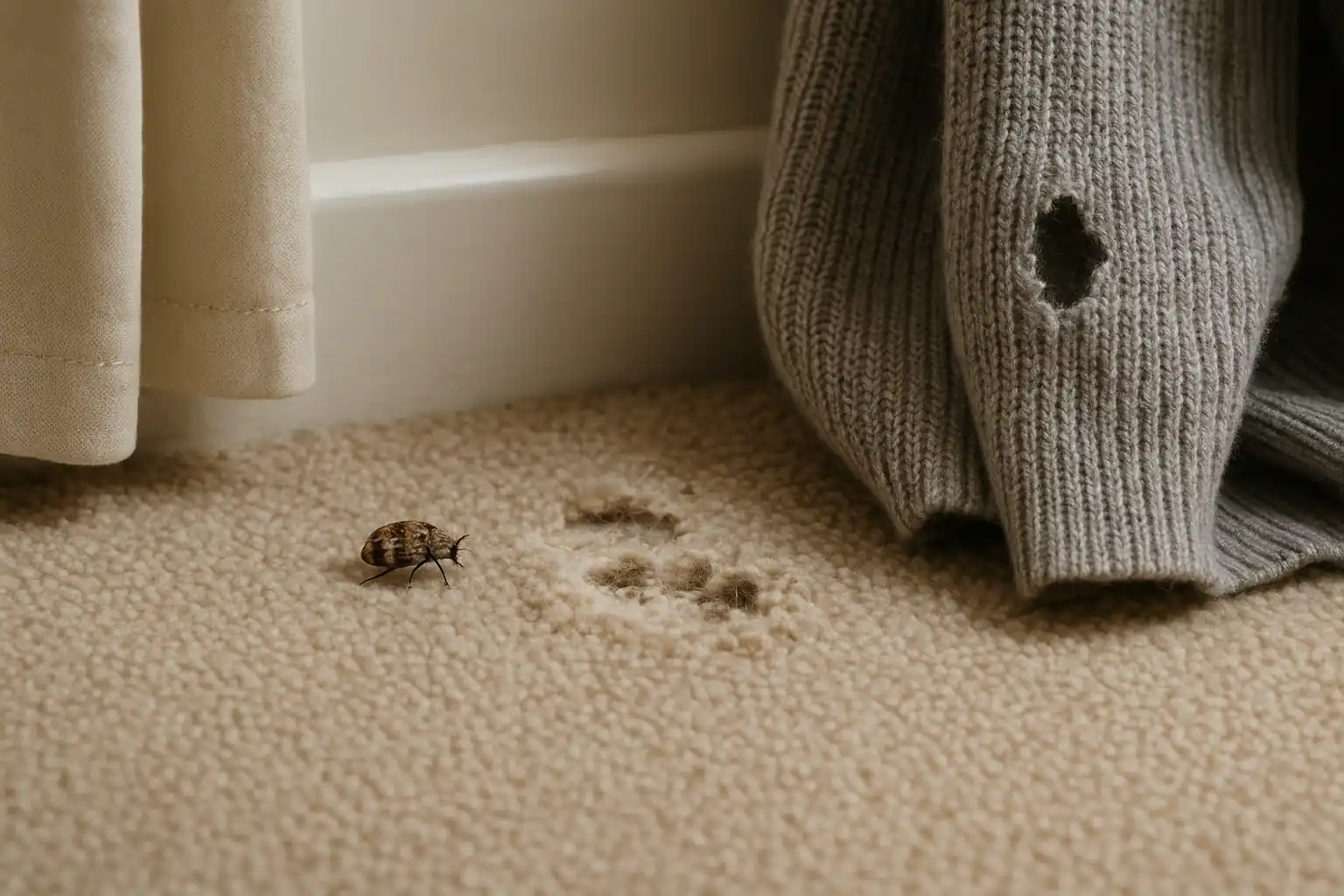
Larvae often feed in quiet edges, gaps, and under furniture.
Natural fibres are more vulnerable than many synthetic materials.
Adult beetles are often noticed around light and window frames.
Wardrobes, bags, and loft storage can hold the source.
Vacuuming helps but may not remove all harbourage or sources.
Old bird nests or organic debris can sometimes support activity nearby.
Carpet beetle larvae can damage wool, natural fibres, carpets, clothing, upholstery, and stored textiles. We start by identifying the affected materials and where larvae may be feeding or hiding.
Good control usually combines treatment with sorting, vacuuming, laundering, and storage changes. We explain what needs attention so the source is not left behind.
Where beetles appear in more than one room, we look for repeat sources such as old textiles, loft items, bird nests, vents, or undisturbed edges.
Pricing depends on pest type, property layout, access, activity level, and the treatment or proofing plan required. Use the calculator or request a quote for the clearest next step.
For inspection-led advice and initial recommendations.
Based on pest pressure, property access, and treatment plan.
Recommended only where inspection findings support it.
The best time to act is when signs are still traceable and before activity becomes harder to contain. These points help decide whether to book a visit or request advice.

Larvae can continue feeding if the source is not found.
Wardrobes, loft boxes, and under-furniture edges often hold activity.
Source removal and storage changes can matter as much as treatment.
We confirm postcode availability and service options first.
The service follows a simple sequence: understand the signs, check access, choose a proportionate approach, then explain aftercare.
We review fabric damage, larvae locations, and adult sightings.
Storage areas, carpet edges, lofts, vents, and debris are considered.
Treatment is planned alongside cleaning and storage actions.
You receive advice on checking future signs and vulnerable items.
Carpet beetle control is based on where larvae are feeding and which fabrics or storage areas are affected.
The plan may include targeted treatment, vacuuming advice, laundering, isolation of items, and source removal where needed.
We keep recommendations practical so you can protect vulnerable textiles without unnecessary disposal.
Every visit is planned around site conditions, safety, proportionate treatment, and clear communication.
Recommendations are based on signs, access, site use, and pest pressure rather than guesswork.
Any preparation, re-entry, pets, children, staff, or food-area precautions are explained before work starts.
You receive realistic next steps for monitoring, prevention, proofing, cleaning, or follow-up.
We aim for prompt local slots; exact timing depends on covered postcode availability.
Carpet beetles do not bite like bed bugs, but larvae and fibres can irritate some people.
Not always. We will explain what can be cleaned, isolated, treated, or removed.
Sorting affected textiles, improving access, and vacuuming may be recommended.
Yes, treatment planning can include wardrobes, carpet edges, soft furnishings, and storage areas where appropriate.
Control lasts best when fabric sources, dust, organic debris, and storage conditions are managed.