
Why choose PCHI
Clear advice and straightforward next steps.

Heat Loss Surveys is handled as a survey-led service so the specification matches the property, access, ventilation and the outcome you need. We explain the practical options before any work is agreed.
Available in covered postcodes. Check coverage before booking.
COVERAGE CHECKER
Enter your postcode to confirm availability in your area. If we cover your postcode, you can continue to the insulation project check.
Clear advice and straightforward next steps.
A structured process from the first step.
PROJECT CHECK
Enter your postcode first so we can confirm coverage and show the right next step.
Postcode
Covered? Your insulation project check continues next.
Calculator unavailable
This estimate tool could not be loaded. Try another service or contact us for a quote.
Loft insulation options
Select the product that best matches your home.
Not sure? Choose the closest option — we’ll confirm suitability before installation.
Loft floor area (m²)
Is the loft boarded?
How easy is the loft to access?
Roof windows or awkward sections?
Solar, battery, or electrical systems in the loft
No questions could be shown for this step. Use Back to change earlier answers, or contact us for a quote.
*
Fixed plan
Fixed plan price
For the current infestation, based on the property type selected.
*Applies to the current infestation while agreed treatment and recommended proofing steps are followed, reasonable access is available, and the service is used fairly.

The plan covers the current infestation while agreed treatment steps are followed, reasonable access is available, and the service is used fairly. If proofing or structural closure is needed to prevent re-entry, we will explain this clearly before quoting separately.
This type of work needs a quick review before we can provide a guide price.
Your guide range (ex VAT)
Clear advice, straightforward next steps, and no surprises.
Grade A mineral wool / rock wool
Dense mineral-fibre products used in lofts for thermal resistance, noise reduction, and fire performance. We confirm the right specification for your roof and ventilation setup.
Fibreglass loft insulation
A widely used roll or batt solution for loft floors. Suited to straightforward upgrades where depth and coverage can be increased safely.
Sheep’s wool insulation
A natural fibre that can help moisture buffering in the loft. We confirm suitability with ventilation and breathable construction details on site.
Spray foam removal
Spray foam can affect surveys, mortgage lending, and roof ventilation. We review the situation, outline options, and agree next steps before any work is scheduled.
Save, email & visit request
Email my estimate
Save to My quotes
Next: create an account
Request a visit time
Choose a preferred date and time window. We’ll confirm availability before anything is booked.
We’ll review your preferred time and confirm the booking by email.
Choose a preferred date and time window. We’ll confirm availability before anything is booked.
House number or name and street address.
This type of work needs a quick review before we can provide a guide price.
Estimate ready
Based on the details provided, here is your estimated service plan and next step.
Clear advice, straightforward next steps, and no surprises.
Without a structured survey, insulation upgrades can target symptoms rather than the biggest heat-loss routes.
Insulation work performs best when it is matched to the building rather than chosen as a one-size-fits-all product. We look at access, existing material, ventilation, moisture risk and how the area is used before recommending heat loss survey.
The aim is to improve comfort and reduce wasted heat without creating avoidable issues. That means checking the surrounding details as well as the thermal survey findings itself.
A well-planned heat loss survey can improve comfort and help the property hold heat more effectively. The exact benefit depends on the building and the specification chosen.
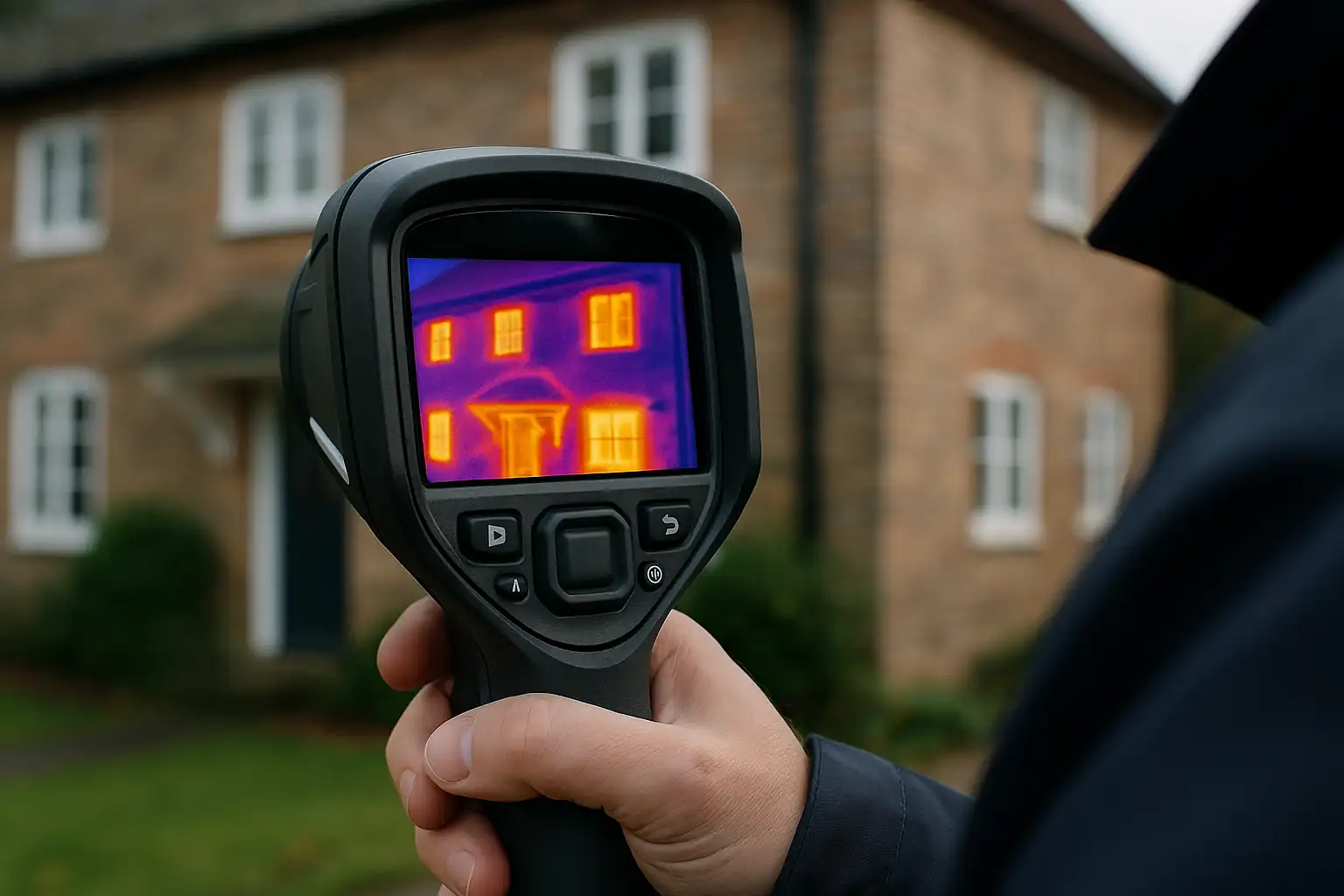
A structured survey highlights where improvements should be focused first.
Findings help separate obvious issues from hidden heat-loss routes or fabric problems.
A survey-led approach helps focus spend on the areas most likely to make a difference.
Access, preparation and finishing details are considered before the work starts.
Recommendations can be sequenced so budget is used more intelligently.
We explain what to maintain, monitor or upgrade next so improvements remain effective.
The process is designed to be clear from the first enquiry through to quotation, completion and aftercare.
Good insulation choices can support comfort and energy efficiency, but the best result comes from understanding the property first.
Heat Loss Surveys should be considered alongside ventilation, moisture control, access and the condition of the existing building fabric.
We avoid promising unrealistic savings. Instead, the focus is on identifying suitable improvements, explaining trade-offs and providing a clear route to action.
A heat loss survey is priced around the level of investigation needed. Some customers need a focused thermal check before choosing insulation work, while others need a wider property review with written priorities. We quote based on access, property size, survey scope, reporting needs and whether follow-on insulation recommendations are required.
For suitable properties needing a focused survey-led review of heat-loss priorities. Final price depends on property size, survey scope and reporting requirements.
We confirm the rooms, comfort issues, insulation concerns and reason for the heat-loss survey before confirming the scope.
The survey may include thermal imaging, visual checks and review of likely heat-loss routes depending on the package agreed.
Where relevant, loft insulation, wall areas, floor routes, ventilation and obvious thermal weak points are reviewed.
Reporting can range from practical notes to a clearer written summary of priorities, limitations and recommended next steps.
We explain which insulation or fabric measures are likely to deserve attention first.
Bigger homes, multiple floors, extensions or unusual layouts may need more survey time.
We make clear where a heat loss survey is useful and where a separate structural, damp, EPC or trade inspection is needed.
If the survey identifies insulation work we can provide a separate quote for the relevant improvement route.
Suitability depends on construction, access, ventilation and the condition of the area being improved.
A clear process keeps the work practical, safe and matched to the property.
The recommendation is shaped by property conditions, not a generic product list.
We confirm the property location and basic service requirement.
The area is checked for safe access, layout and working constraints.
Existing materials, moisture clues, ventilation and heat-loss routes are reviewed.
The recommended service and any preparation requirements are explained clearly.
A quote is prepared around the property-specific specification.
Findings are organised into practical recommendations.
You can see what to do first and what can wait.
You receive practical advice for maintenance and future improvements.
Helpful answers before you request a quote or survey.
No. Suitability depends on construction, access, existing condition and ventilation. That is why an assessment is important.
The survey can identify priorities. If follow-on work is suitable, a separate quote or scope can be prepared.
We plan around the agreed scope and explain access requirements before booking. Some services are straightforward while others need more preparation.
Sometimes. We will tell you what needs moving or preparing once we understand the property and the area being worked on.
No single measure guarantees an EPC outcome. The aim is to identify practical improvements and likely priorities.
Yes. Ventilation and moisture risk are considered because insulation should not block airflow that the property needs.
Often, but older buildings need careful assessment so the specification suits the fabric and avoids avoidable moisture problems.
We confirm the service, check coverage and arrange the next suitable step, usually a property assessment or quote review.
Coverage depends on postcode and availability. Use the coverage checker or request a quote so we can confirm.
Yes, where it makes practical sense. We can explain whether a combined or staged approach is better for the property.
Where a survey or scope is prepared, the key recommendations and next steps are explained clearly.
Access, property size, existing condition, material choice, preparation and the level of finishing required all affect cost.
Tell us about the property and we will confirm whether Heat Loss Surveys is suitable, what needs checking and the best next step.


